Key points to verify before booking a dune buggy ride in Dubai
Dubai’s desert landscape offers some of the most exciting off-road experiences you can find. A dune buggy lets you cover sandy terrain at a good pace, climb dunes, and feel the desert’s vastness. But not every rental or tour is the same. A few checks before you confirm a booking can save you from disappointment and help you choose a vehicle that suits your skill level. This article covers the main things to look at when you are about to book a buggy dubai trip.
Check the vehicle condition and maintenance
A dune buggy takes a lot of punishment. Sand, heat, and repeated dune climbing put stress on every part. Before you set off, look at the buggy itself. A well-maintained machine will show obvious signs of care. The lightweight frame should be free of cracks or excessive rust. Tyres should have decent tread depth, worn-out tyres lose grip on loose sand and make steering unpredictable. Ask the operator about their maintenance schedule. If they cannot give a clear answer, treat that as a warning sign.
Engine and brake system
The engine displacement matters for power and reliability. A larger displacement usually means more torque for climbing dunes, but it also means more weight. For most riders, a mid-range engine offers a good balance. The brake system is even more important. Sand reduces braking efficiency, and on a steep dune you need brakes that respond instantly. Check that the brake pedal feels firm and that there is no unusual play. If the buggy has a handbrake, test it before moving. A professional operator will show you these checks as part of the safety briefing.
Know the route and terrain
Dubai’s desert has varied terrain: soft sand, hard-packed patches, steep faces, and flat stretches. A good operator provides a trail map or at least a verbal description of the route. You want to know how long the ride lasts, how many dunes you will climb, and whether there are any technical sections. Beginners should avoid routes that include extreme dune climbing or narrow ridges. More experienced riders might look for routes that offer sand dune climbing and fast runs on open flats. Ask about the guide’s experience as well. A guide who knows the desert can adjust the pace and avoid areas with hidden hazards.
Safety gear and briefing
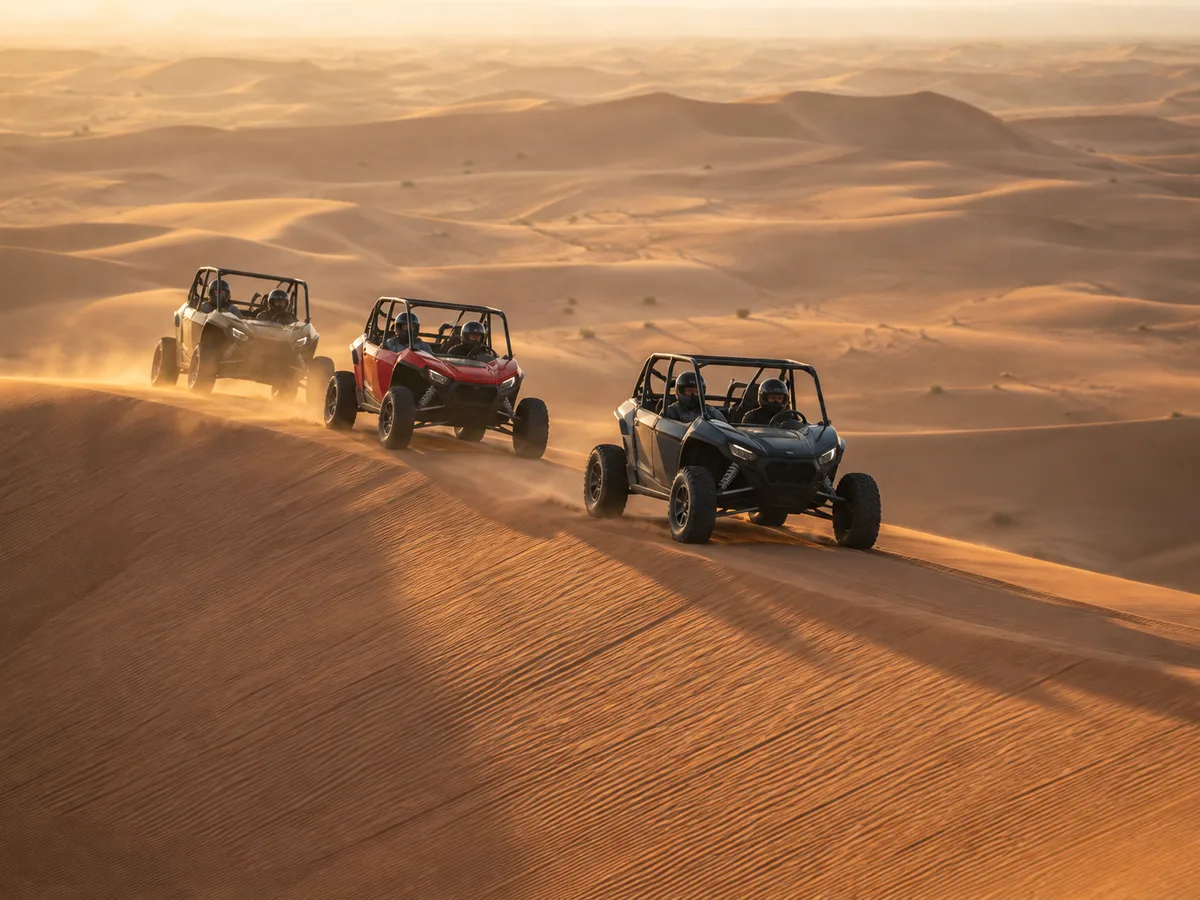
A proper rental includes a safety briefing. That briefing should cover how to operate the buggy, what to do if you get stuck, and how to signal for help. The operator should provide dust goggles, a helmet, and gloves. Dust goggles are not optional, flying sand can cause serious eye irritation. Check that the goggles fit well and do not fog up. The buggy should have a roll cage or a sturdy frame that protects you in case of a turnover. Ask about the maximum number of passengers per buggy. Overloading affects handling and increases the risk of rolling.
Understand the booking terms
Before you pay, read the cancellation and refund policy. Some operators require a deposit and have strict cancellation windows. Others offer full refunds if you cancel far enough in advance. Check what happens if the weather turns bad, high winds or sandstorms can make riding dangerous. A reputable company will either reschedule or refund in such cases. Also confirm what is included in the price: fuel, gear, guide, transport to and from the desert, and any refreshments. Hidden charges for these extras can turn a good deal into an expensive one.
Insurance and liability
Riding a dune buggy carries inherent risk. Ask whether the rental includes insurance that covers damage to the vehicle and injury to you. Some operators offer only basic third-party cover, which leaves you liable for any damage to the buggy. If you are a confident driver, you might accept that. If you are new to off-road driving, look for an operator that includes comprehensive cover. It is also wise to check your own travel insurance policy. Many travel insurance plans exclude motorised desert activities. A quick call to your insurer can clarify what is covered.
Reviews and reputation
Online reviews give a good sense of what to expect. Look for recent reviews that mention vehicle condition, guide behaviour, and overall organisation. A pattern of complaints about broken-down buggies or rude staff should make you pause. On the flip side, consistent praise for well-maintained equipment and knowledgeable guides points to a reliable operator. Do not rely only on the operator’s own website. Third-party review sites often provide a more balanced picture. If you can, ask people you know who have done a buggy dubai ride for their recommendations.

Physical requirements and health
Dune buggy riding is physically demanding. You need to brace against bumps, steer with both hands, and sometimes push the buggy out of soft sand. If you have back problems, a history of neck injuries, or any condition that could be aggravated by jolts, consult your doctor first. The operator should ask about health conditions before the ride. If they do not, mention your concerns. Most operators allow a passenger to ride alongside a driver, which is a good option if you want the experience without the physical strain. Check the weight limit for both driver and passenger. Exceeding it can affect the buggy’s centre of gravity and make it unstable on dunes.
What to bring and wear
Dress for the desert. Lightweight long trousers and a long-sleeved shirt protect your skin from sun and sand. Closed-toe shoes are essential, sandals or flip-flops offer no protection and can slip off. A scarf or buff to cover your mouth and nose helps if the wind picks up. Bring water, especially if the ride lasts more than an hour. Many operators provide water, but it is better to have your own. A small backpack can hold your essentials, but make sure it is secured so it does not bounce around during the ride. Leave valuables at your hotel. Sand and dust get everywhere, and electronics do not like fine particles.
Timing and weather
The desert heats up quickly after sunrise. Early morning or late afternoon rides are more comfortable and offer better light for photography. Avoid the middle of the day in summer months, when ground temperatures can exceed 50°C. Winter months (November to March) are the most pleasant for desert activities. If you book during summer, choose a sunset slot. The cooler temperatures make the ride safer and more enjoyable. Always check the forecast before heading out. A sandstorm can reduce visibility to a few metres and make navigation dangerous. A responsible operator will cancel or reschedule in those conditions.
Final check before you go
When you arrive at the desert location, do a quick walk-around of the buggy yourself. Look for loose bolts, cracked hoses, or any fluid leaks. The steering wheel should turn smoothly without excessive play. Test the horn and lights if the ride extends into dusk. Confirm that the guide has a working radio or phone for emergencies. If something feels off, speak up. It is better to delay or switch vehicles than to set off in a buggy that does not feel right. Most operators appreciate a rider who cares about safety.

A dune buggy ride in Dubai can be a memorable experience when you take a few minutes to check the basics. Vehicle condition, route suitability, safety gear, and clear booking terms all contribute to a smooth outing. A little preparation goes a long way in the desert.